How to Reduce Cart Abandonment and Recover Lost Sales
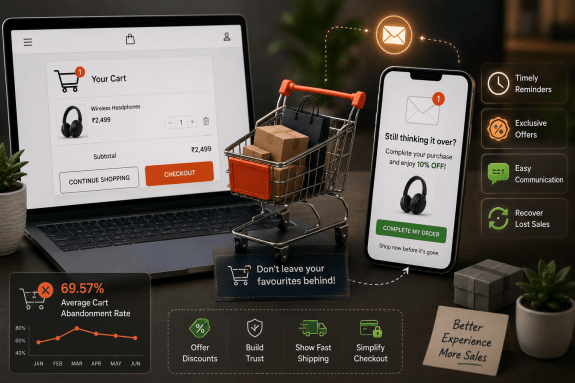
If you want to reduce cart abandonment in your online store, you're chasing one of the biggest hidden leaks in eCommerce. Across the world, roughly seven out of ten shoppers add items to their cart and then leave without paying. That means for every ten sales you could make, seven are slipping away at the last step.
In India, the reasons are often very specific: a surprise delivery charge, a checkout that asks for too much, a payment page that doesn't support the buyer's favourite UPI app, or plain second-guessing. The encouraging part is that most of these are fixable.
This guide covers why buyers abandon carts and, more importantly, the practical steps you can take to win those sales back.
Definition Box
What is cart abandonment?
Cart abandonment happens when a shopper adds one or more products to their online cart but leaves the site before completing the purchase. It's measured as a percentage of started checkouts that never turn into paid orders.
A high abandonment rate is rarely random; it usually points to friction, doubt, or a nasty surprise at checkout. Understanding the causes lets you fix them. The most common triggers are:
- Unexpected shipping or extra charges
- A long or confusing checkout process
- Limited or unreliable payment options
- Concerns about trust, returns, or delivery time
Quick Facts: Cart Abandonment
| Average abandonment rate | Around 70% across eCommerce |
| Top cause | Unexpected costs at checkout |
| India favourite | UPI and cash on delivery |
| Best recovery tool | WhatsApp and email reminders |
| Ideal checkout length | As few steps as possible |
| Device to prioritise | Mobile, where most Indians shop |
| Quick win | Show all costs upfront |
Fix Your Checkout First
Most abandonment happens right at checkout, so that's where you get the fastest wins. Every extra field, every surprise, and every confusing button costs you sales. Aim for a checkout a distracted shopper can finish on a phone in under a minute.
Checkout improvements that work
- Show shipping and taxes early, not as a shock at the end
- Allow guest checkout without forcing account creation
- Offer UPI, cards, and cash on delivery together
- Keep the form short and auto-fill wherever you can
Recover the Sales You Almost Lost
Even a great checkout won't stop every buyer from wandering off. Life happens, a phone call, a distracted moment, a "let me think about it." That's where recovery comes in. A gentle, well-timed nudge brings a surprising number of those shoppers back.
Send a friendly reminder within a few hours, ideally on WhatsApp since open rates are so high in India. Include the product they left, a direct link back to the cart, and maybe a small incentive like free shipping. Don't be pushy; one or two reminders are plenty.
High-Friction vs Low-Friction Checkout
The difference between a store that loses carts and one that keeps them often comes down to friction. Compare the two experiences below.
| High-friction checkout | Low-friction checkout |
|---|---|
| Forces account sign-up first | Allows quick guest checkout |
| Reveals shipping only at the end | Shows all costs upfront |
| One payment method only | UPI, cards, and cash on delivery |
| Many form fields across pages | A single short, mobile-friendly page |
| No follow-up when a cart is left | Automatic WhatsApp reminder |
Platforms like Webilns are built for the low-friction side: fast mobile checkout, UPI and card payments, transparent pricing, and GST invoices generated automatically. If you also sell offline, the POS billing keeps your online and in-store sales in one place.
Common Mistakes to Avoid
- Hiding delivery charges until the final screen
- Forcing shoppers to create an account before buying
- Offering just one payment method in a UPI-first market
- Never following up on abandoned carts at all
- Ignoring how the checkout looks and works on a phone
Frequently Asked Questions
1. What's a good cart abandonment rate?
Anything below the roughly 70% average is decent. The real goal is steady improvement, so track your rate and reduce it month over month.
2. When should I send a cart reminder?
The first reminder works best within a few hours, while the buyer still remembers. A second, gentler nudge a day later can catch stragglers.
3. Should I offer a discount to recover carts?
Sometimes. Free shipping or a small discount can tip a hesitant buyer over, but use it sparingly so shoppers don't abandon on purpose expecting one.
4. Does cash on delivery reduce abandonment?
In India it often does, because many buyers still prefer paying on delivery. Offering it alongside UPI removes a big trust barrier.
5. Is guest checkout really necessary?
Yes. Forcing sign-up is one of the top reasons people quit. Let them buy as a guest and invite them to create an account afterwards.
Conclusion
Cart abandonment isn't a sign that shoppers don't want your products; it's usually a sign that something got in their way. Clear pricing, a short mobile checkout, the payment methods Indians actually use, and a friendly reminder afterwards can recover a big chunk of those lost sales.
Treat your checkout as seriously as your product photos and marketing. Every bit of friction you remove is money you keep, and every reminder you send is a sale you might otherwise have handed to a competitor. Small fixes here often deliver the biggest returns in your whole store.