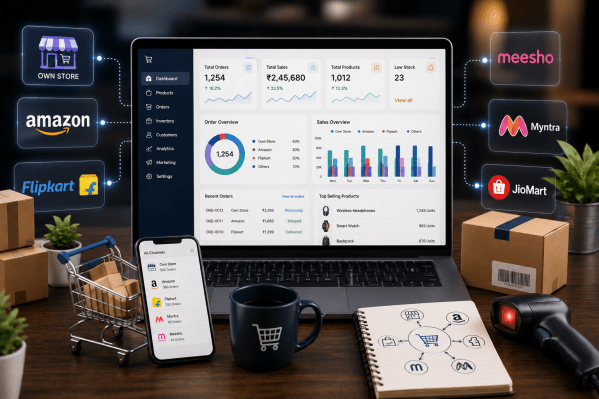
Multichannel Selling: Run Your Store and Marketplaces Together
Multichannel selling — running your own online store alongside marketplaces like Amazon and Flipkart — is how smart Indian sellers get the best of both worlds. You tap into marketplace footfall for discovery while building your own store where the margins are fatter and the customer is truly yours.
The catch? Juggling multiple channels can quickly turn into chaos. Different inventory counts, mismatched prices, orders slipping through the cracks, and a WhatsApp full of "where's my order?" messages. Done badly, multichannel selling doubles your headaches instead of your revenue.
Done right, it's a growth engine. This guide covers how to run your store and marketplaces together without losing your mind — from syncing inventory to keeping pricing sane and knowing which channel deserves your energy.
Definition Box
What is multichannel selling?
Multichannel selling means offering your products across several sales channels at once — your own website, online marketplaces, social media shops, and even a physical POS counter — while managing them as one connected business rather than separate silos.
- Sell on your own store plus marketplaces simultaneously.
- Reach customers wherever they prefer to shop.
- Reduce dependence on any single platform.
- Keep inventory and orders in sync across channels.
Quick Facts: Multichannel Selling
| Main benefit | More reach without depending on one platform |
| Biggest risk | Overselling from unsynced inventory |
| Marketplace commission | 15% to 30% per sale |
| Own store commission | Only payment gateway fees |
| Best discovery channel | Marketplaces and social shops |
| Best margin channel | Your own online store |
| Key to success | Centralised inventory and order management |
Use Each Channel for What It's Good At
The mistake most sellers make is treating every channel the same. Marketplaces and your own store play very different roles, and understanding that changes how you use each one.
Marketplaces for discovery, your store for loyalty
Marketplaces bring you buyers who've never heard of your brand — that's their superpower. But they take a big cut and hide the customer's details. Your own store is where you convert those first-time buyers into repeat fans you can actually reach again.
- Use marketplaces to get discovered and build reviews.
- Slip a store insert or offer into every marketplace parcel.
- Drive repeat and loyalty purchases to your own store.
Channel Comparison at a Glance
Here's how the two main channels compare so you can decide where to push volume and where to protect margin.
| Your Own Store | Marketplace |
|---|---|
| Low fees, high margin | High commission, thin margin |
| You own the customer data | Platform owns the customer |
| You must drive the traffic | Built-in buyer traffic |
| Full branding control | Standardised listings |
Keeping stock accurate across both is where a unified system pays off. With Webilns managing your storefront and POS together, your online and in-store inventory stay in step so you never sell what you don't have.
Common Multichannel Mistakes to Avoid
Multichannel selling rewards discipline. Sidestep these common traps and you'll scale smoothly instead of drowning in operational mess.
- Managing inventory separately, leading to overselling.
- Undercutting your own store price on marketplaces.
- Ignoring GST-compliant invoicing across channels.
- Spreading too thin instead of mastering two channels first.
- Not tracking which channel is actually profitable.
Frequently Asked Questions
1. Should I sell on marketplaces or just my own store?
Both, ideally. Marketplaces give you discovery and trust, while your own store gives you margin and customer ownership. Together they balance reach with profitability.
2. How do I avoid overselling across channels?
Keep a single source of truth for inventory. A connected system that updates stock across your store and POS in real time is the only reliable way to prevent selling items you no longer have.
3. Should prices be the same on every channel?
Not always. Marketplaces take a bigger cut, so you may price slightly higher there to protect margin. Just avoid undercutting your own store, or you train buyers to shop where you earn least.
4. How many channels should a small seller start with?
Start with two — your own store plus one marketplace. Master those before adding social shops or more platforms. Spreading too thin early leads to sloppy operations.
5. How do I handle GST across multiple channels?
Use invoicing that generates GST-compliant bills regardless of where the sale happens. Consolidated, tax-ready reports make filing far simpler than reconciling each channel by hand.
Conclusion
Multichannel selling isn't about being everywhere — it's about being in the right places and managing them as one business. Let marketplaces bring the discovery and let your own store keep the customer and the margin.
The sellers who thrive are the ones who stay organised: synced inventory, sensible pricing, and GST-ready invoicing across every channel. Bring it all together with Webilns, and multichannel selling becomes a growth engine instead of a daily fire drill.